
From Bare Walls To Living Shorelines: How 3D Printing Is Advancing Marine Habitat Restoration
When Waterford City & County Council set out to protect the rail line running along the Suir estuary, the brief was straightforward: reinforce the sheet-pile wall along the North Bank. What the project became was something more ambitious, Ireland's largest 3D-printed marine biodiversity enhancement scheme, and a working demonstration of what additive construction can do for our coastlines.
The challenge: a wall with no ecological value
Sheet-pile and quay walls do their job structurally, but ecologically they're dead space. Flat, featureless steel offers marine life nowhere to settle, shelter, or feed — a stretch of coastline that provides engineering protection but nothing in the way of biodiversity.
For Waterford's rail-line protection scheme, that wasn't good enough. The brief called for a wall that could do both: hold the line, and bring the estuary back to life.
What HTL delivered
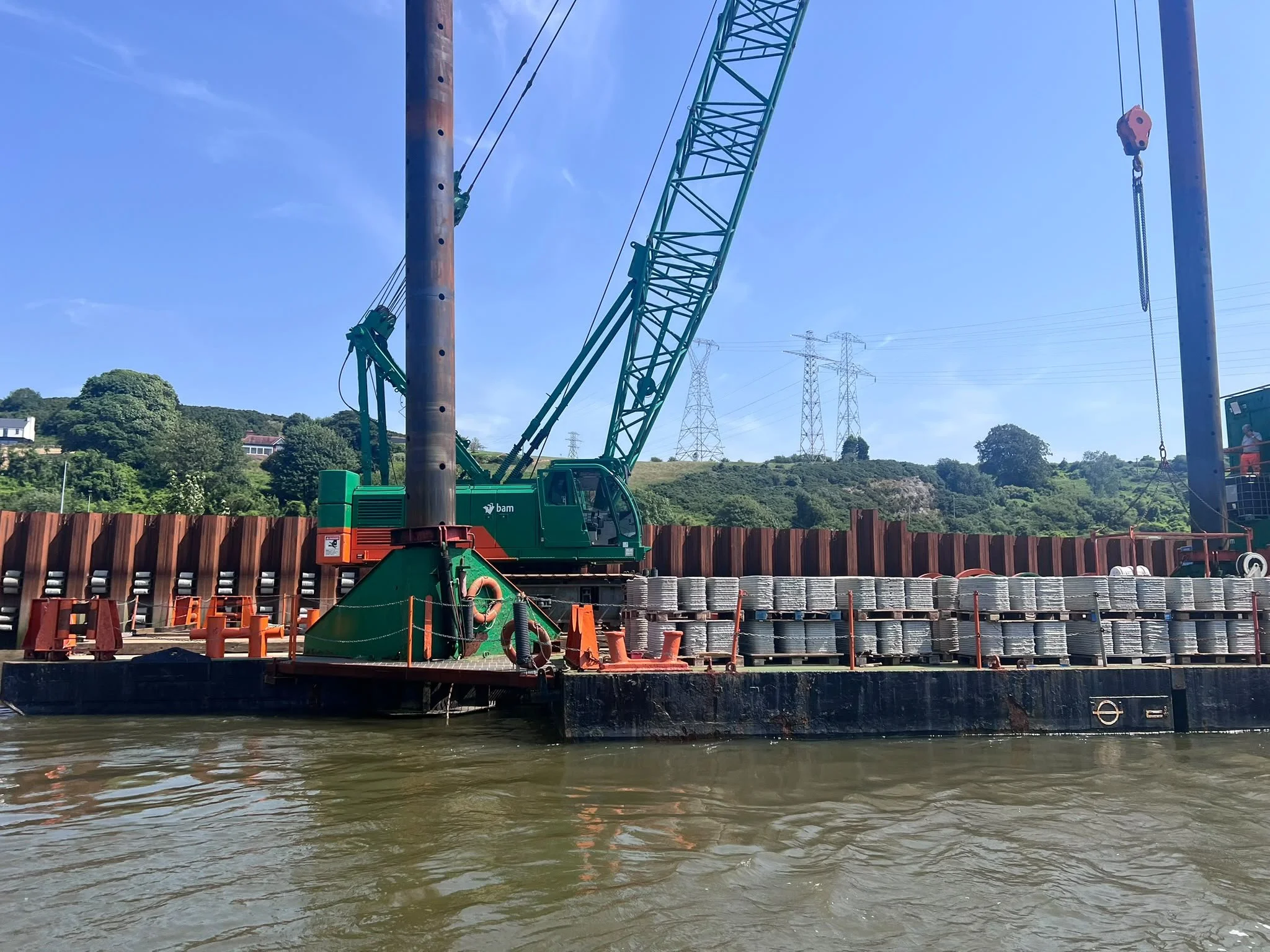
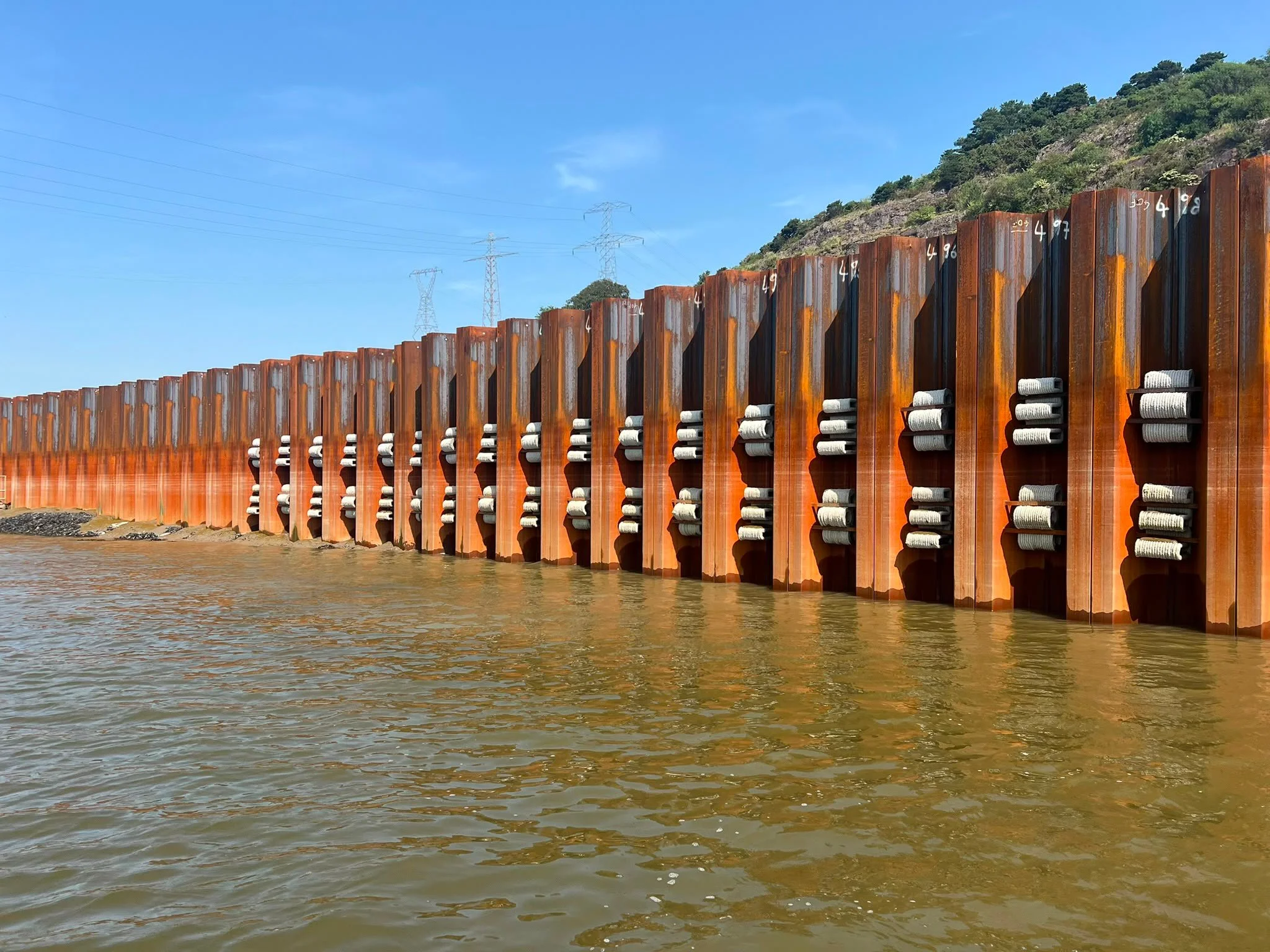
Working alongside main contractor BAM and low-carbon concrete supplier Roadstone (a CRH company), HTL printed and delivered 430 bespoke habitat modules, adapted from StoneReefs' reef-module design to suit the specific conditions of the Suir estuary. The modules were fixed directly onto the existing sheet-pile wall — no new civil works required.
The results, in numbers:
430 habitat modules printed and delivered
1,505 m² of new colonisable marine habitat created on the wall face
550 m of wall converted to colonisable habitat, across five distinct biodiversity zones
Each module was printed in low-carbon HTL-Roadstone concrete, with the design tuned zone by zone to match local conditions along the estuary — from bare wall to living habitat, one printed panel at a time.
The technology behind it: StoneReefs
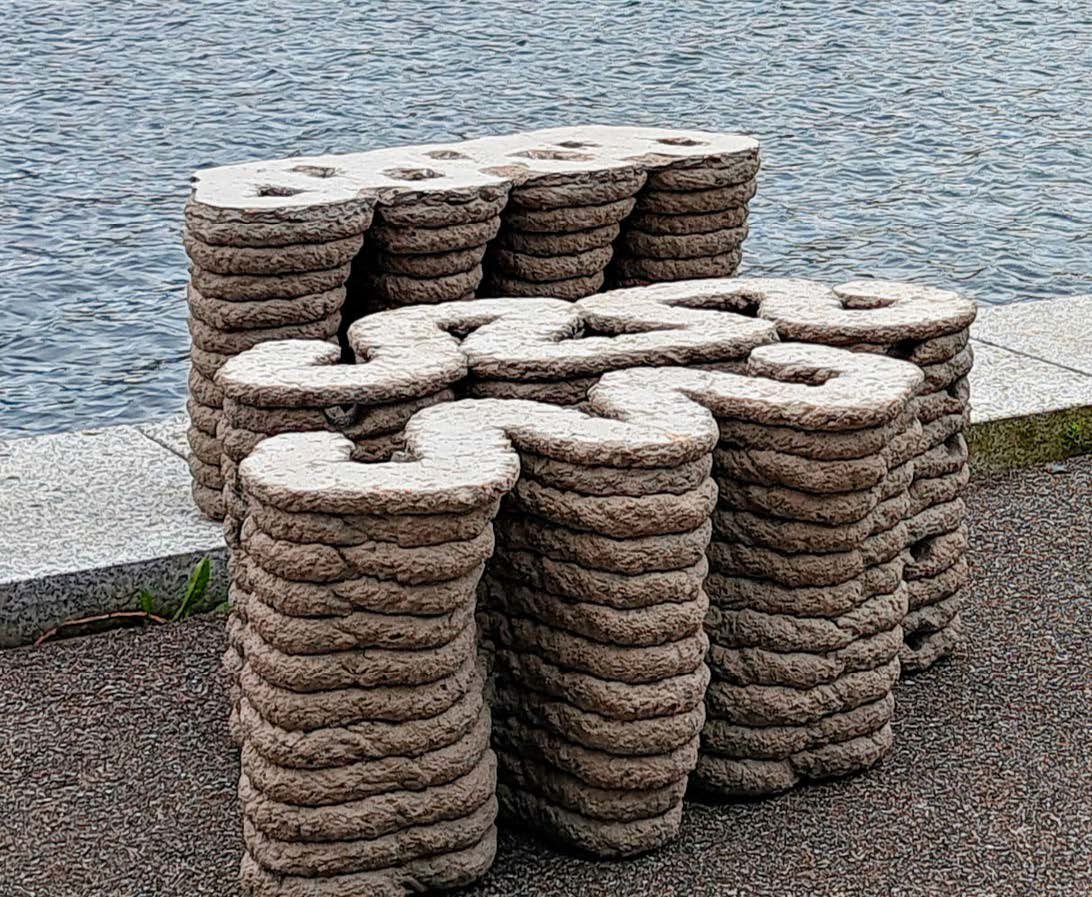
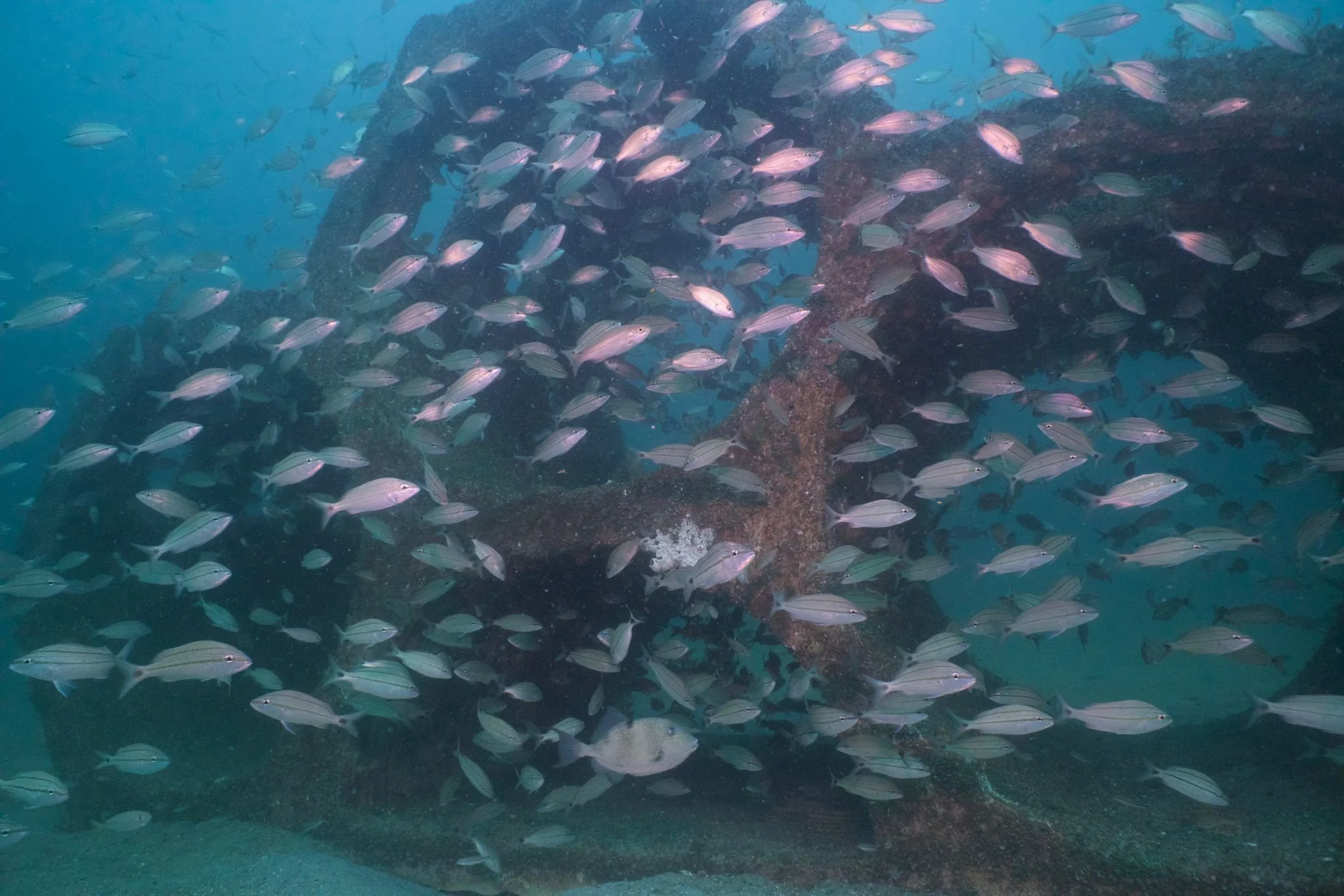
The module geometry comes from StoneReefs, HTL's Danish design partner and the exclusive UK & Ireland route to market for their reef technology. StoneReefs' modules are built around a simple ecological insight: marine species need texture. Their crevice-rich geometry and undulating, rough-printed surface give barnacles, oysters and coralline algae somewhere to settle that a flat wall never could.
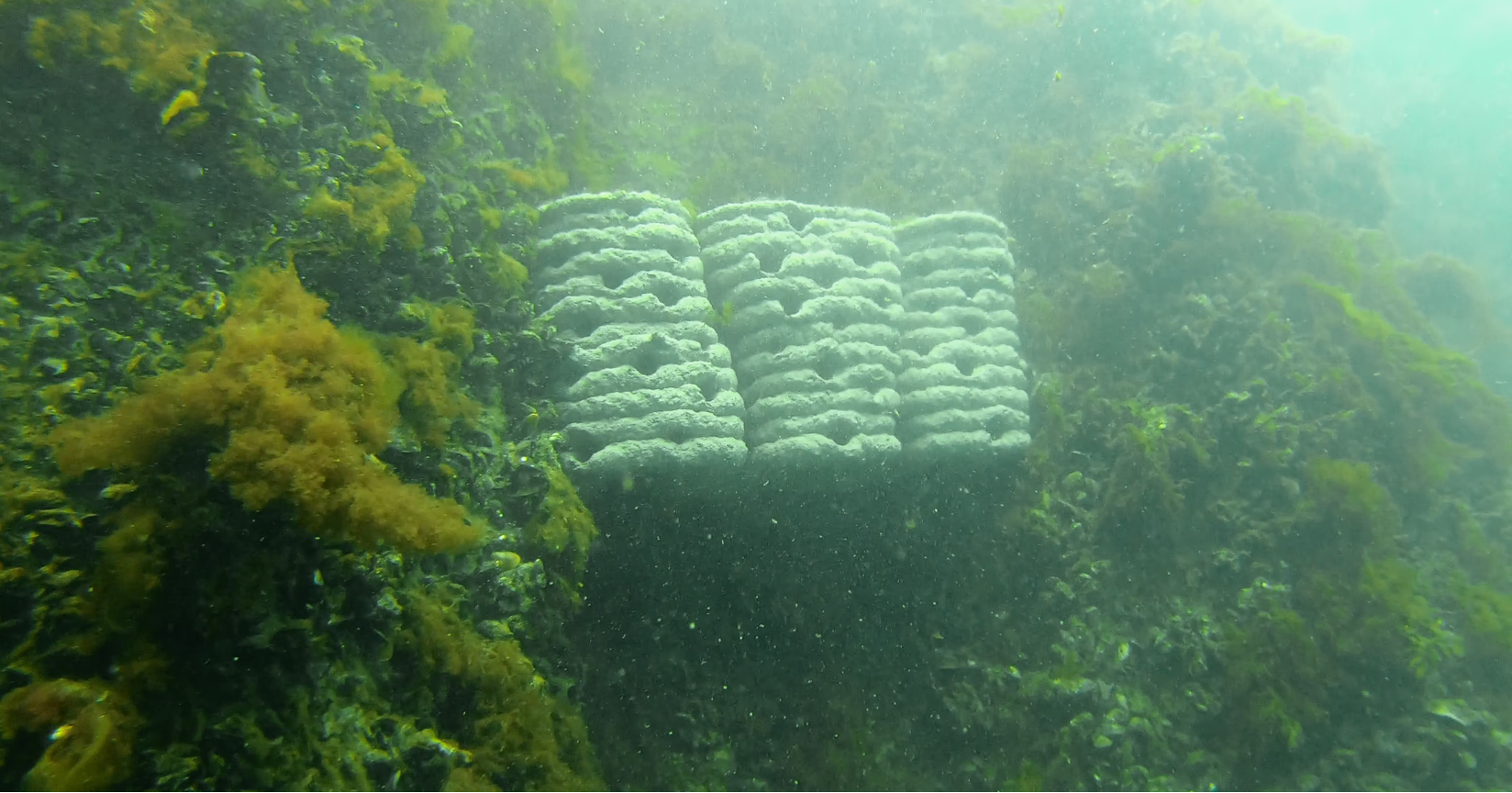
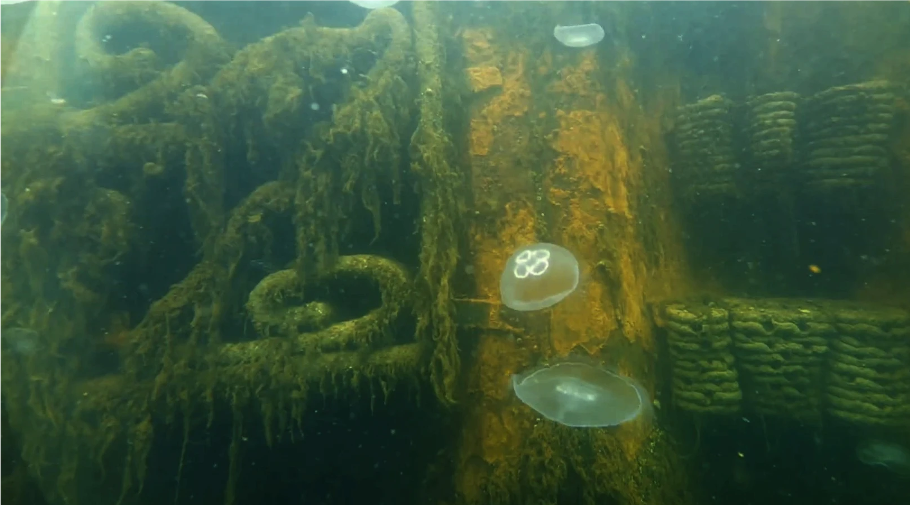
The approach is already proven at scale. StoneReefs modules are in service across Copenhagen's Nordhavn, Helsingør, Korsør and Fredericia harbours. Under independent monitoring at Studstrup, colonised modules saw species richness roughly double — from 11 to 22 species — within six months, while the adjacent bare wall showed near-zero growth over the same period. That precedent is exactly what gave confidence to the Waterford design.
SEAHIVE and the coastal defence side of the story
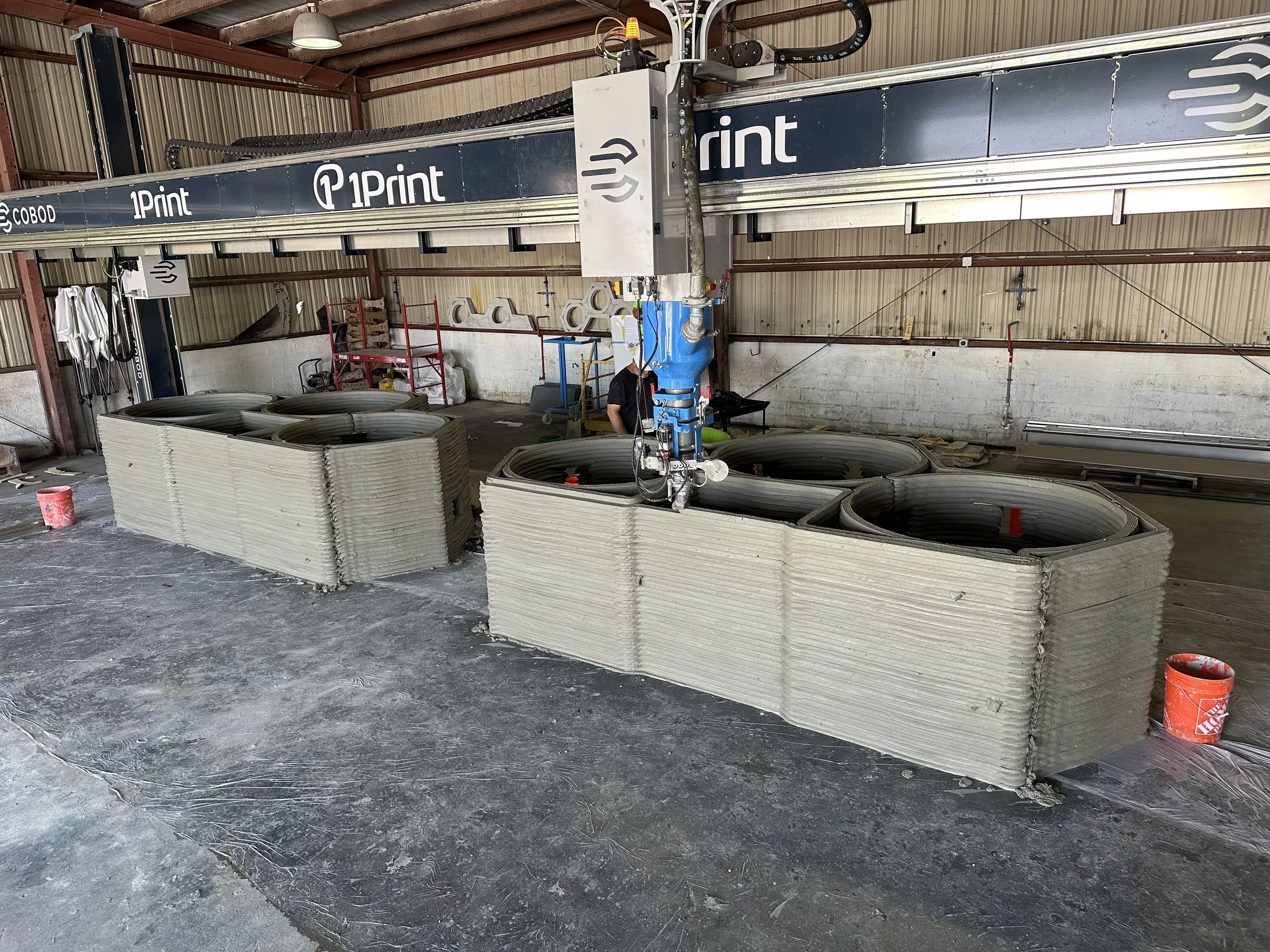
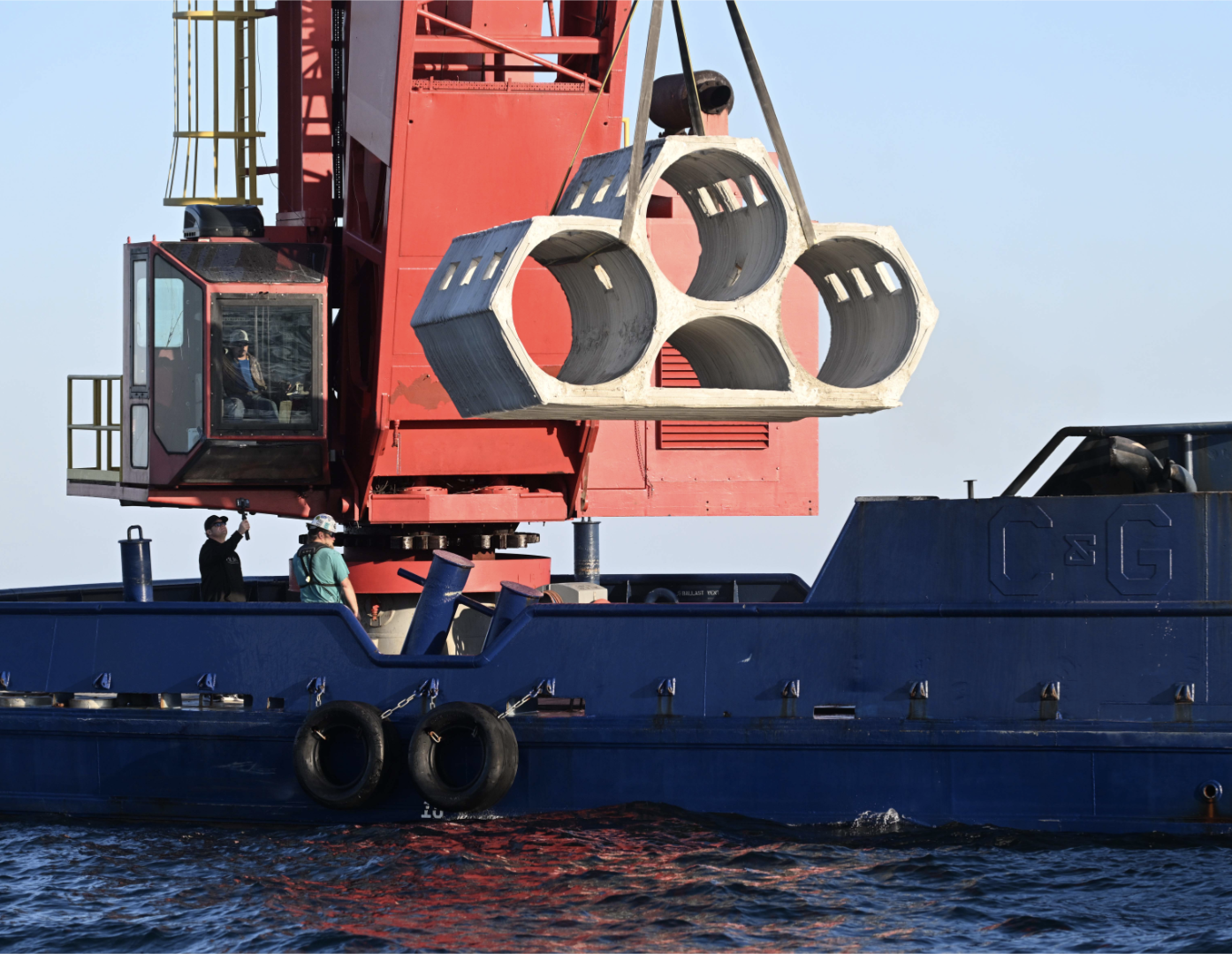
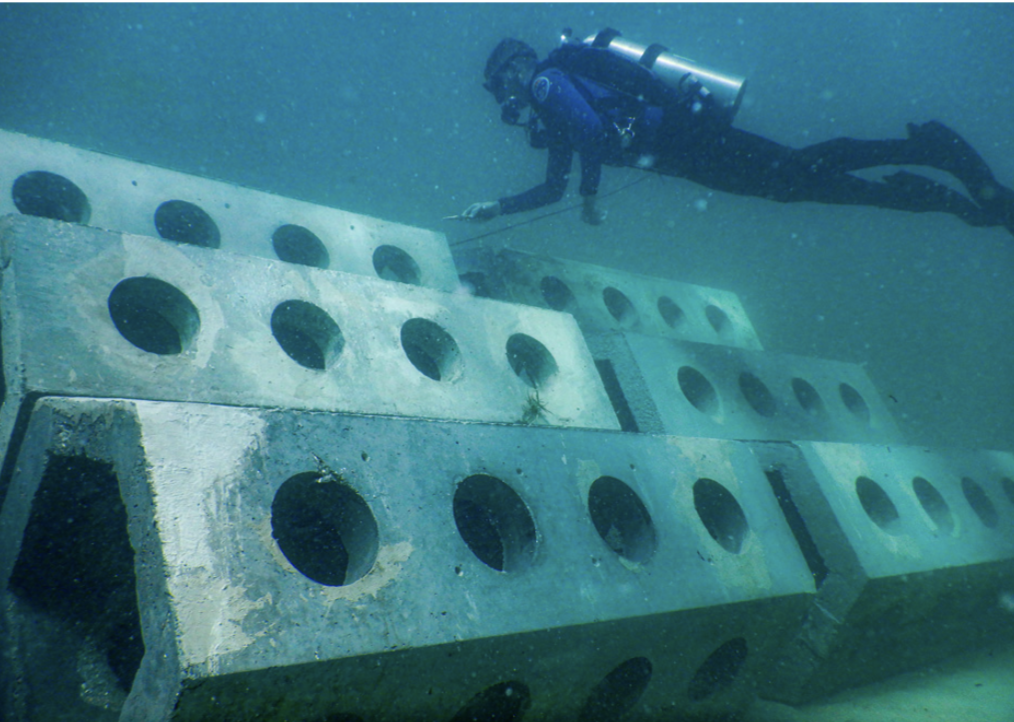
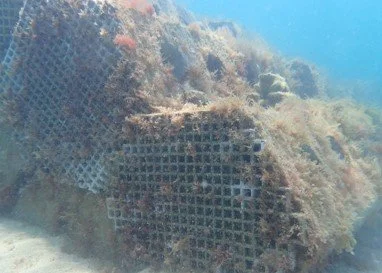
StoneReefs modules retrofit onto existing walls, but HTL's other marine technology partner, 1Print, takes a different approach for exposed coastlines. SEAHIVE, developed at the University of Miami and validated in the SUSTAIN wave laboratory, is a system of hollow, perforated hexagonal units. Water passes through the structure and loses its energy before it reaches the shore, while the voids left behind become habitat in their own right.
SEAHIVE is already deployed at Miami Beach, Pompano Beach and Okaloosa County, and is now being adapted for sites in Ireland and the UK. Compared with traditional rock armour, the difference is stark: rock dissipates wave energy through sheer mass and volume of quarried stone, with limited ecological value and a large transport footprint. 3D-printed units are printed to the site's exact geometry, dissipate energy through their structure rather than their bulk, and double as habitat rather than displacing it — often avoiding the need for a separate habitat-mitigation contract altogether.
Why 3D concrete printing makes this possible
Waterford and the SEAHIVE deployments share a common enabler: 3D construction printing (3DCP). Depositing concrete layer by layer, to a digital model, unlocks a few things that conventional precast or in-situ methods can't easily match:
Design freedom — geometry can be tuned to the species and conditions of each specific site, zone by zone
Reduced waste — precise material deposition means no excess, no formwork, no offcuts
No formwork required — cutting both cost and lead time
Locally sourced, low-carbon materials — as used with Roadstone at Waterford
Minimal transport — units can be printed close to, or even at, the point of installation
Built-in traceability — every module is designed to support long-term, independently monitored evidence for Biodiversity Net Gain (BNG) obligations and planning conditions
That last point matters as much as the engineering. Planning authorities increasingly need measurable, verifiable biodiversity outcomes, not just good intentions. A 3D-printed module carries its design and provenance data with it, making it straightforward to monitor colonisation over time — exactly as happened at Studstrup, and exactly what's now being tracked at Waterford.
Planning coastal or marine works?
The Suir estuary project shows what's possible when structural protection and ecological restoration are designed together from the outset, rather than treated as separate line items. If you're planning coastal defence or marine habitat works, the earlier HTL is involved, the more the design can be tuned to your site.